The Shadows Within: Deep Psychological Breakdowns of Us, Midsommar, and The Room
MustWatchHub Film Desk
In-Depth Cinematic Research Essays
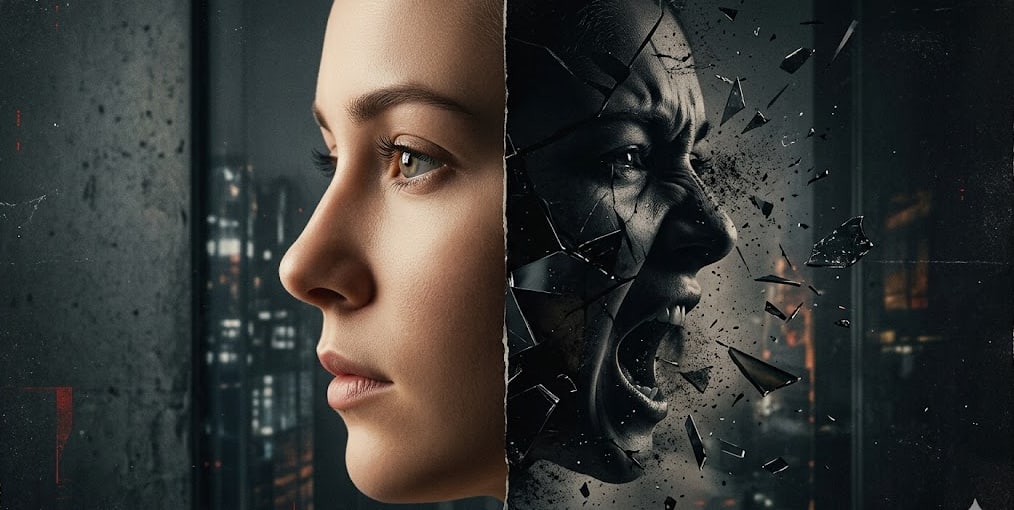
Modern horror uses monsters to mirror the internal architecture of our deepest human traumas. (Image: MustWatchHub)
Great horror doesn't just make you jump; it lingers in your mind long after the screen fades to black. It leaves an unsettling feeling in your chest because the monsters on screen look suspiciously like the thoughts we try to hide from ourselves. True thrillers don't rely on plastic masks or excessive gore; they operate like a scalpel, peeling back the layers of human behavior to reveal the messy, complex mechanics of our minds underneath.
When you sit down to watch a narrative unfold, your subconscious mind is actively decoding symbols, projections, and buried traumas. Today, we are going to look past the initial surface-level scares of three massive masterpieces of psychological cinema: Jordan Peele’s brilliant class nightmare Us, Ari Aster’s sun-drenched study of grief Midsommar, and Christian Volckman’s deeply unsettling, claustrophobic reality-warper The Room (2019).
Grab a hot cup of coffee and pull up a chair. Let's look closely at the hidden messages and complex human psychology locked inside these modern masterpieces.
Us: Jungian Shadows and the True Price of Social Privilege
When Jordan Peele dropped Us in theaters, audiences expected another sharp social satire like Get Out. Instead, they were greeted by an elegant, bloody home-invasion movie featuring silent, scissor-wielding doppelgängers dressed in bright red jumpsuits. On the surface, it’s a terrifying story about clones coming to claim their place above ground. But if you look at it through a psychological lens, the movie is a brilliant adaptation of Carl Jung's concept of the Shadow Self.
Jung argued that every human being carries a hidden shadow side—an unconscious repository of repressed desires, raw instincts, and structural vulnerabilities that we refuse to show the world. In the film, the Tethered are literal manifestations of these hidden shadows. They live in the dark, forgotten spaces below, mirroring the movements of their counterparts above without ever experiencing the joy, warmth, or luxury of free will.
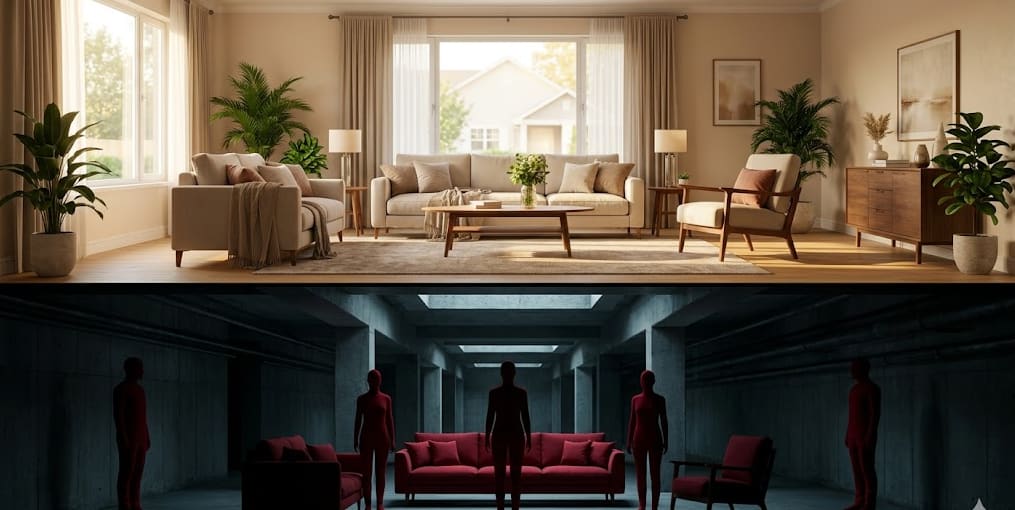
What makes the movie truly terrifying is its exploration of structural guilt and societal blindness. The Wilson family represents the pristine comfort of middle-class success. They buy vacation homes, purchase motorboats, and worry about superficial competitive relationships with their wealthier friends. But their comfortable lifestyle is physically anchored to the silent suffering of the Tethered below.
When Red looks at Adelaide and rasps, "We are Americans," Peele lays his cards flat on the table. The film isn't just about an individual psychological breakdown; it's about a collective failure of empathy. It forces us to ask an uncomfortable question: whose systemic suffering is quietly funding your personal comfort?
Midsommar: The Cathartic Release of Shared Grief and Toxic Codependency
Most horror movies rely on shadows, dim flashlights, and dark basements to scare you. Ari Aster does the exact opposite in Midsommar. He traps you in an isolated Swedish commune where the sun literally never sets, forcing you to look closely at every single horrific act in bright, unyielding daylight. But the true monster of the film isn't the Hårga cult or their ritual sacrifices—it's the suffocating weight of unacknowledged grief and toxic relationships.
The film follows Dani, a young woman who has just experienced an unimaginable family tragedy. Instead of finding support from her boyfriend, Christian, she is met with cold indifference, emotional distance, and passive-aggressive resentment. Christian represents a particularly insidious form of relationship toxicity: emotional gaslighting through apathy. He doesn't love Dani enough to support her through her grief, but he is too cowardly to leave her.

When they arrive at the commune, the Hårga cult notices Dani’s deep emotional isolation and exploits it perfectly. The cult operates like a distorted psychological mirror. In the outside world, Dani has to muffle her cries into pillows so she doesn't inconvenience Christian. But among the Hårga, when she breaks down, the cult members surround her, look into her eyes, and scream *with* her. They physically share the burden of her panic attack.
The final, shocking image of the film—Dani smiling while surrounded by fire—isn't a depiction of madness. It is a depiction of ultimate catharsis. She has completely burned away the toxic relationship that kept her small, trading it for a community that validates her pain, even if that validation comes at a horrific cost.
The Room (2019): Consumerism, Manifestation, and the Cage of Desire
Christian Volckman's The Room is one of the most underrated psychological sci-fi thrillers of the last decade. The premise sounds like a classic fairy tale: a young couple, Matt and Kate, move into an isolated, run-down historic home and discover a hidden room that materializes absolutely anything they wish for. Expensive artwork, fine champagne, millions of dollars in cash—the room grants it all instantly.
But this dream quickly morphs into a dark psychological study of materialism and greed. The room operates on a brutal, parasitic rule: everything it creates is an illusion that instantly turns to ash the moment it leaves the boundaries of the house. This is a brilliant, heavy-hitting metaphor for the empty loop of modern consumerism. We buy things to fill an internal void, but the satisfaction vanishes almost immediately, leaving us stuck in a loop of wanting more.
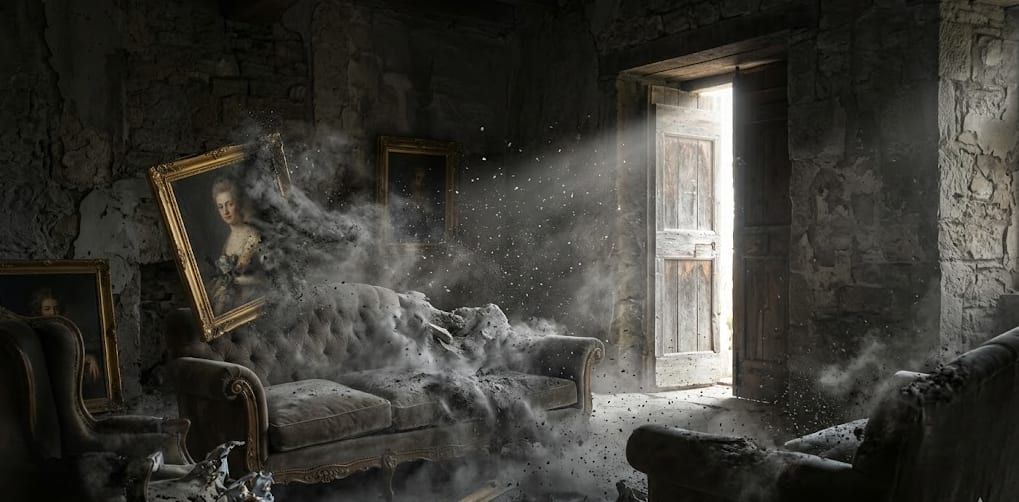
The true breakdown happens when Kate, desperate after experiencing multiple miscarriages, uses the room to wish for a baby boy. By manifesting a child out of thin air, they accidentally create a permanent psychological cage. They can never leave the house without their child instantly turning to dust, trapping them inside a synthetic reality of their own making.
The film masterfully breaks down the toxic nature of artificial fulfillment. It shows how easily our parenting instincts, relationships, and basic grip on reality can warp when we refuse to accept the natural pain of grief, loss, and boundaries. It is a chilling reminder that when you try to bypass the real work of healing through shortcuts, you end up trapped inside your own illusions.
The Common Thread: Confronting Our Personal Monsters
When you place these three films side-by-side, an incredible psychological thread connects them all. Each movie shows characters who are deeply afraid of facing a painful truth, choosing instead to hide behind comfortable illusions until reality forces its way in.
- In Us: Adelaide tries to run from the dark truth of her past identity, only to discover that you cannot permanently lock your true self in the dark.
- In Midsommar: Dani tries to ignore the decay of her relationship because she is terrified of being truly alone in the world, until she finds validation in the most extreme space imaginable.
- In The Room: Kate and Matt try to fix their emotional trauma using material objects, only to learn that a life without real boundaries quickly becomes an active prison.
Ultimately, these thrillers endure because they act like a mirror. They show us that the most terrifying monsters aren't hiding in deep space or waiting under the bed. The real monsters are the truths we actively hide from ourselves, quietly waiting in the corners of our minds for the right moment to step into the light.